General
i voted sticker:”I Voted” stickers appear at ICE memorials as voters express protest in 2026 midterms
In the 2026 midterms, "I Voted" stickers are appearing at memorials for people killed by ICE agents in Minneapolis and Houston, turning a decades-old civic tradition…
Sticker tradition takes on new political meaning
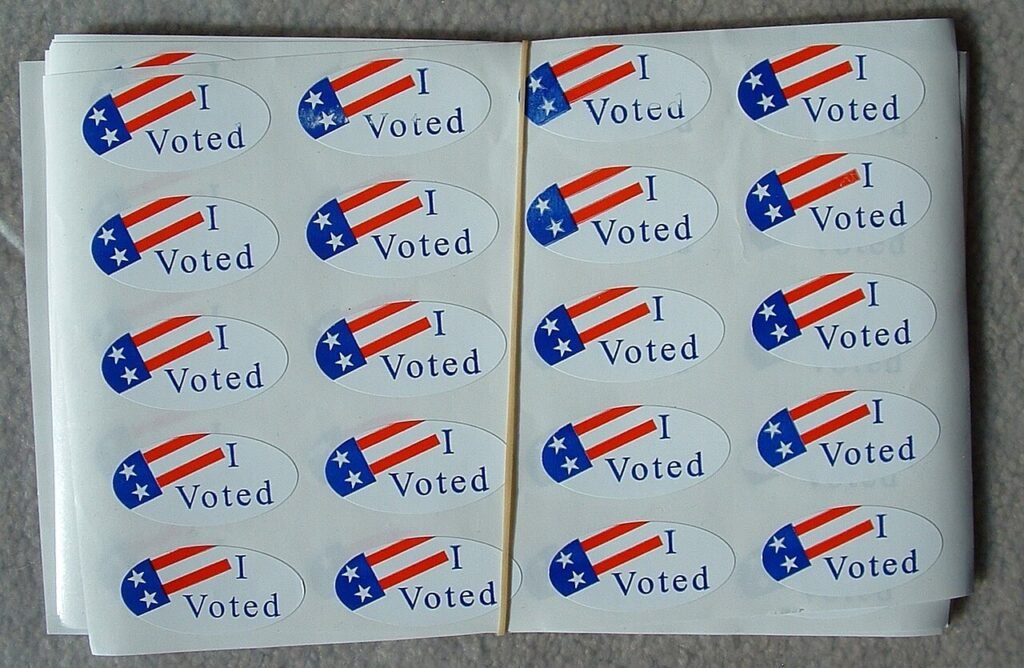
The familiar “I Voted” sticker — a fixture of American elections since the 1980s — has become an unexpected symbol of protest during the 2026 midterm elections. In Minneapolis and Houston, voters are placing the stickers on memorials for individuals killed by U.S. Immigration and Customs Enforcement (ICE) agents, turning a routine civic token into a public statement against the Trump administration’s immigration enforcement policies.
Memorial tributes in Minneapolis and Houston
According to reporting by Axios, voters in Minneapolis have left “I Voted” stickers at memorials for Alex Pretti, an ICU nurse, and Renee Good, a writer and mother, both killed by federal agents in January 2026. In Houston, a memorial for Lorenzo Salgado Araujo, a construction worker and father fatally shot by ICE agents in July 2026, has been covered with stickers and handwritten messages such as “I voted for you” and “Por usted” (“for you” in Spanish).
Ronaldo Salgado, Araujo’s oldest son, placed the first sticker on his father’s memorial during the first week of early voting. Hundreds of others followed. “I am beyond touched that this community and that the entire city is voting with my dad in mind … I didn’t realize it would grow this big,” Salgado told the Washington Post.
Why the sticker matters in 2026
The phenomenon highlights how immigration policy has become a motivating issue for voters in the 2026 midterms. National polls leading up to Election Day showed Latino voters swinging back toward Democrats, with immigration cited as a key area of disagreement with the administration, according to an October NBC News/Telemundo poll. The stickers — nonpartisan by design, bearing only the words “I voted” — have been adopted by communities as a way to link civic participation to personal loss.
Origins of a civic tradition
The “I Voted” sticker has no federal mandate. As Ballotpedia notes, no federal law mentions the sticker, and no state requires it. Distribution is entirely at the discretion of local election officials — clerks, registrars, and election boards. Some hand them out at the ballot box, others at the exit, and some include them in absentee ballot envelopes. A number of jurisdictions, including Santa Clara County, California, hold design contests inviting students to create original sticker artwork.
The modern sticker tradition traces back to the 1980s. According to Cornell University’s Media Studies department, local businesses in Fort Lauderdale, Florida, began circulating stickers in 1982 as a way to offer discounts to voters, as reported by the Miami Herald. The design that became ubiquitous nationwide was created in 1987 by Janet Boudreau, who had recently purchased Intab, an election supply company, from her father. Her hand-drawn, rippling-flag design — produced in English and Spanish — was intended to encourage turnout. By 2000, Intab was selling more than 100 million stickers annually to nearly all 50 states, Boudreau told AARP.
An earlier predecessor resides in the National Museum of American History: a 1920 button distributed by the Republican Party in Lancaster, Pennsylvania, reading “Under the 19th Amendment I Cast My First Vote, Nov. 2nd, 1920,” commemorating the first presidential election in which women could vote nationwide.
Variations across the country
Because election administration is decentralized, sticker designs vary widely. The most common version — a small white oval with a stylized waving American flag — has been distributed by a North Carolina supplier since 1987. But many localities produce their own designs featuring state seals, local landmarks, or multilingual text. Ballotpedia’s 2026 gallery shows distinct stickers from Alaska, Arizona, Colorado, Georgia, Hawaii, Idaho, and other jurisdictions, with several marked as design contest winners.
A symbol adapted
What began as a turnout incentive and evolved into a badge of civic pride has, in November 2026, taken on an additional layer of meaning. At memorials in Minneapolis and Houston, the stickers serve as both a record of participation and a message: the act of voting is being dedicated to those who can no longer cast a ballot themselves.