General
childcare:Understanding Childcare: Types, Impact, and Access in the United States
Childcare ranges from home‑based care to center‑based programs, supporting child development and enabling parents to work. This overview examines its types, economic and developmental impact, and…
What Is Childcare?
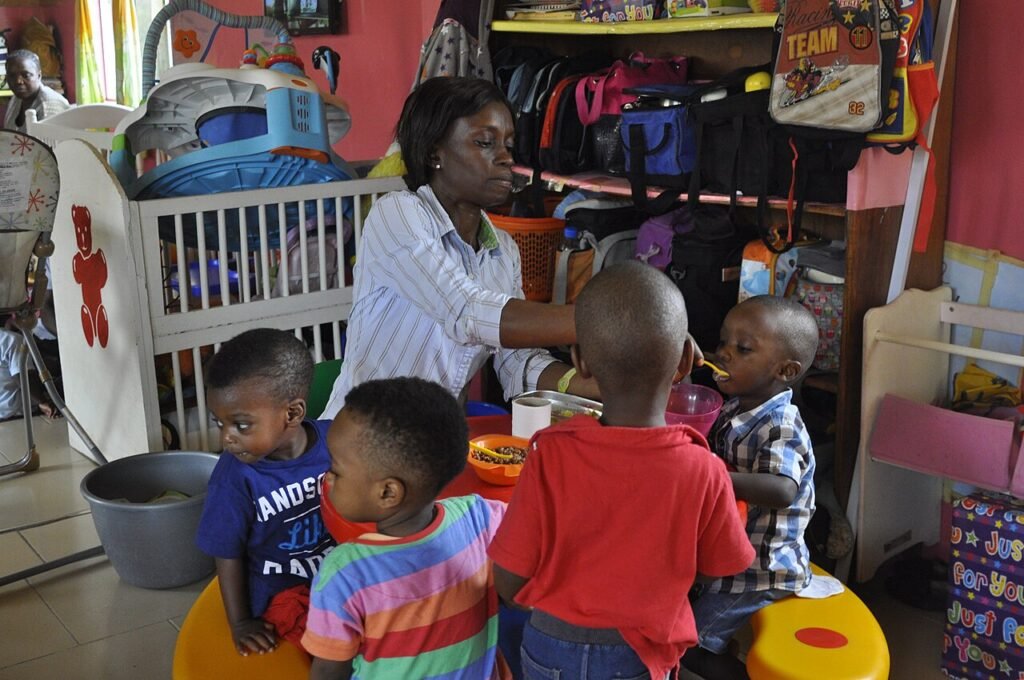
Childcare refers to the supervision and nurturing of children, including both informal arrangements by parents and formal services delivered by organized providers. It covers care in a child’s home, a provider’s home, center‑based facilities, family child‑care homes, and non‑profit or informal settings.
Types of Childcare
In the Child’s Home
When parents or relatives provide care, it is the most traditional form of childcare. Grandparents, nannies, or babysitters often fill this role, offering flexible, personalized attention.
In the Provider’s Home
Family child‑care homes operate in a licensed residence and typically serve small groups of children. These settings aim to replicate a home environment while meeting safety standards.
Center‑Based Childcare
Center‑based programs are larger facilities that provide structured early‑education activities, meals, and extended hours. According to a 1997 Urban Institute study, 32 % of preschool children with employed mothers are cared for in center‑based settings.
Other Models
- Non‑profit daycare offers sliding‑scale fees and community support.
- Informal care may involve neighbors or undocumented providers and often lacks regulation.
Developmental and Economic Impact
Early educators play a crucial role in brain development. Research shows that quality childcare establishes social relationships, supports cognitive growth, and lays the foundation for lifelong learning. Because more than two‑thirds of U.S. children have both parents in the workforce, childcare also functions as an economic stabilizer, allowing parents to participate in the labor market or pursue education.
A 2025 report from the Center for American Progress emphasizes that “childcare is early education” and that expanding affordable options helps parents join the workforce, boosts productivity, and increases household spending power.
Historical Development
Organized childcare in the United States dates back to the early 1800s, when infant day schools opened in Boston and New York. The industrial revolution and waves of immigration led to the creation of day nurseries for poor urban children; by about 1910, New York City operated 85 such nurseries serving over 5,000 children daily. World War II prompted the federal Lanham Act of 1941, which marked the first time the national government helped fund childcare for non‑poor families whose parents worked in war production.
Cost, Access, and Equity
Cost is a central barrier. The fragmented nature of the U.S. system means families face widely varying prices, and low‑income households often lack sufficient subsidies. Inequities affect rural areas, minority communities, and families with infants or toddlers, who face higher costs and limited availability.
California’s Child Care and Development Division (CCDD) outlines a mission to build an “equitable, comprehensive, quality, and affordable child care and development system.” The division oversees state‑subsidized programs, quality‑improvement initiatives, and technical assistance for local providers.
Resources and Policy Landscape
Federal and state governments maintain portals such as Childcare.gov, which links to state‑specific resources, consumer‑education materials, and reporting tools for safety concerns or fraud. National organizations, including the Center for American Progress and academic research institutions, continue to analyze policy options aimed at expanding access and improving quality.
Key Takeaways
- Childcare spans formal centers, family‑home providers, and informal arrangements.
- It supports critical early brain development and enables workforce participation.
- Historical programs and federal involvement have shaped today’s mixed public‑private system.
- Cost and geographic disparities remain major challenges to universal access.
- State agencies like CCDD and federal sites such as Childcare.gov provide subsidies, standards, and guidance for families and providers.